
Di 30-Day Clock: How Jensen Huang Save Nvidia from Di Edge of Complete Collapse
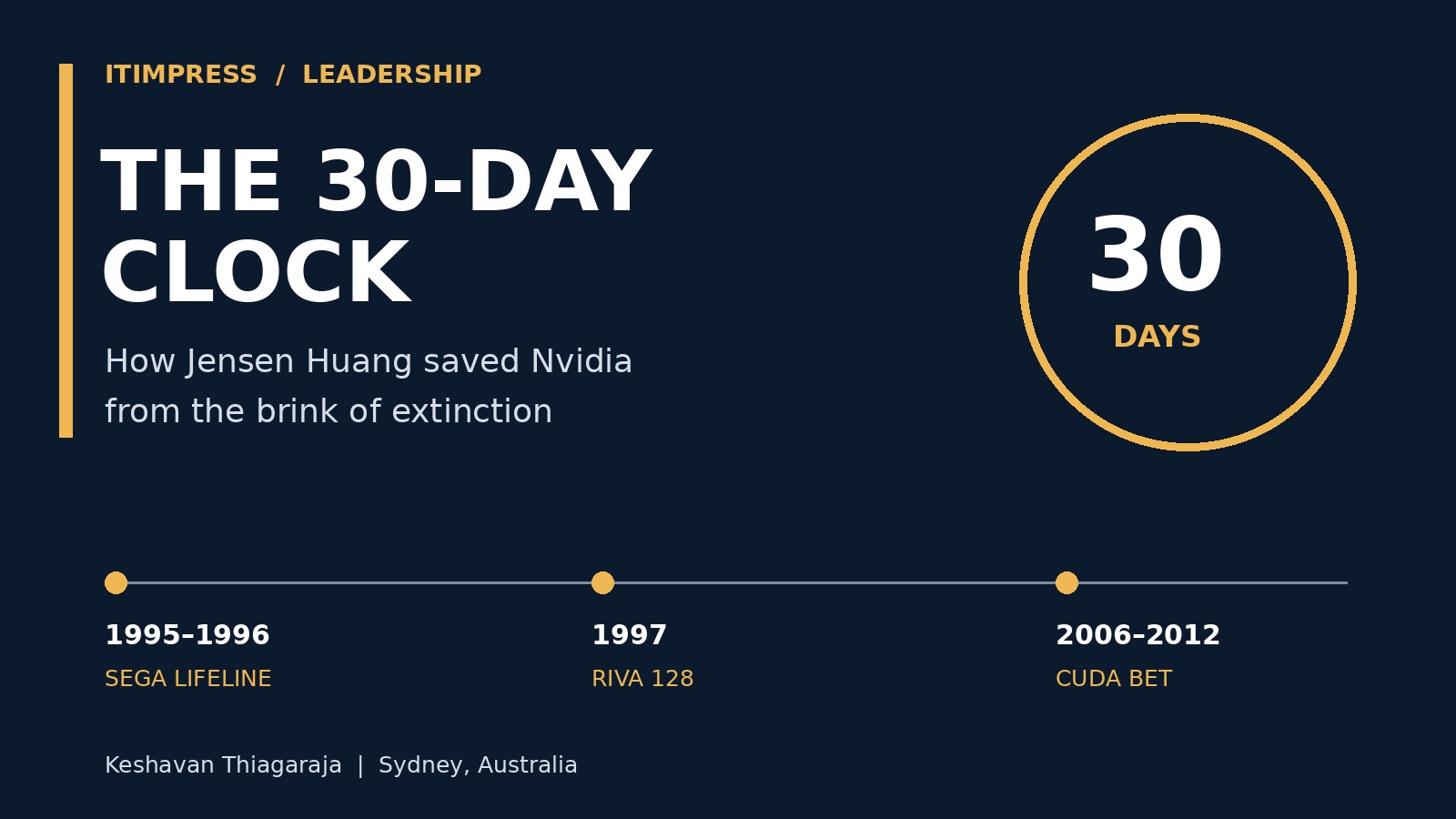
Introduction: How di 30-day clock dey shape company?
For people wey dey look from outside, Nvidia be like giant wey nobody fit stop, worth many trillion dollars and holding up di worldwide artificial intelligence revolution. But inside di company head office for Silicon Valley, na another saying dey ring for di corridors. CEO and co-founder Jensen Huang dey often remind workers: "Our company get only 30 days before we go close business."
Dis no be empty company exaggeration. Na business philosophy wey form inside di fire of almost total destruction. At least three separate times, Nvidia face bankruptcy wey fit happen immediately. Each time, na Huang powerful combination of hard truth, extreme risk-taking and stubborn long-term vision save di company.
1. Di Lifeline from Sega (1995–1996)
For middle of di 1990s, Nvidia na startup wey dey struggle. Dem first graphics chip, NV1, na to handle curved quadratic surfaces. For technology, e be wonder; for business, e be disaster. Small time after dem release am, Microsoft make triangle-based polygon rendering di standard for Windows through DirectX.
Nvidia technology turn old-fashioned immediately. Di company have to cancel di next-generation NV2 chip, and di cash wey remain fit last only 30 days.
As sure collapse dey face am, Huang fly go Japan to meet Shoichiro Irimajiri, CEO of gaming giant Sega. Sega don give Nvidia contract for dem coming game console. Instead make Huang bluff to escape di matter, e take big gamble on complete openness. E tell Irimajiri plainly say Nvidia architecture don reach dead end and dem no fit fulfil di contract.
But Huang add one desperate request: if Sega cancel di contract without paying, Nvidia go close. E still ask for di final contract payment of $5 million, presenting am as investment to keep Nvidia alive.
Irimajiri recognise Huang talent and honesty, so e agree. Sega turn di payment into equity stake, and dis give Nvidia six important months to keep operations running.
2. Di Last-Chance Gamble of RIVA 128 (1997)
Even with Sega lifeline, Nvidia survival still no sure at all. Di company owe plenty debt and have to sack more than half di workers. Di capital wey remain fit build exactly one more chip.
For 1997, di normal industry method na to manufacture physical prototypes, test dem, fix bugs, then manufacture again. Nvidia no fit afford dis process.
Huang decide to stake di whole company on one radical method wey nobody don prove: design and test di chip entirely inside software simulation. Because dem no get money for prototype stage, e send di design wey dem never test physically straight from computer simulation to di manufacturing factory.
Na di ultimate last-chance gamble for di company. If just one transistor dey wrong position, di chip go fail, di money go finish, and Nvidia go declare bankruptcy.
Di gamble succeed wonderfully. RIVA 128 work perfectly for di very first try. E become immediate big hit, selling more than one million units in only four months. Dis single chip alone pull Nvidia out of inability to pay debt and clear di way for di company 1999 initial public offering, or IPO.
3. Di Multi-Billion-Dollar CUDA Gamble (2006–2012)
Di third time Nvidia near disaster no come from failed product. Na one extremely expensive vision wey Wall Street hate cause am.
For 2006, Huang introduce CUDA, Compute Unified Device Architecture. Na software platform wey dem put inside every Nvidia graphics card, allowing people use di cards for general high-performance computing, no be only video games.
For many years, di move look like terrible mistake. Building CUDA need billions of dollars for research and development. E also require extra hardware parts inside every chip Nvidia sell, and dis seriously squeeze di company profit margins.
Investors vex well well. Wall Street heavily criticise Huang say e dey destroy shareholder value on one niche technology wey nobody dey use. Nvidia share price crash by more than 80%, wiping out billions of dollars in market value and leaving di company very vulnerable.
Even with heavy pressure to abandon di project, Huang refuse to back down. E keep investing for CUDA because e believe say di world go eventually need massive parallel processing power.
E stubbornness change di direction of technology history. For 2012, AI researchers discover say Nvidia graphics cards wey CUDA dey power na di completely perfect engine for training deep neural networks. When generative AI boom burst out ten years later, Nvidia get monopoly over di software infrastructure wey people need to build di future. Di competitive defence start with one gamble wey almost break di company.
Conclusion: Di Legacy of Di Near-Death Culture
Today, Nvidia history of surviving near-extinction events dey guide how di company operate. As Huang dey treat di company like say e always remain only 30 days before collapse, e put adaptability and constant suspicion inside Nvidia DNA. Na strong reminder say technology giants no dey grow from flawless, straight-line success, but from di ability to survive di moments when everything go wrong.
References
Powered By K7